

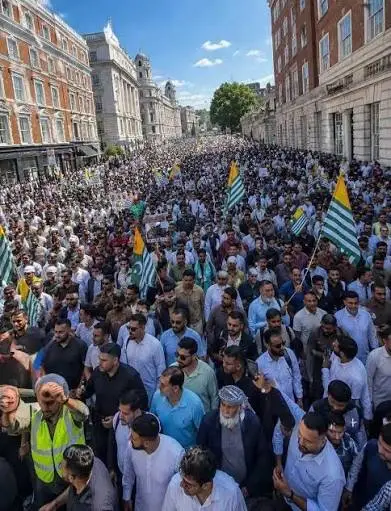
Western Europe is facing a critical challenge regarding community cohesion, integration, and the boundaries of political speech. Beyond traditional socio-economic integration hurdles, a more complex phenomenon has emerged: the systematic importation and anchoring of foreign geopolitical conflicts within domestic European spaces.
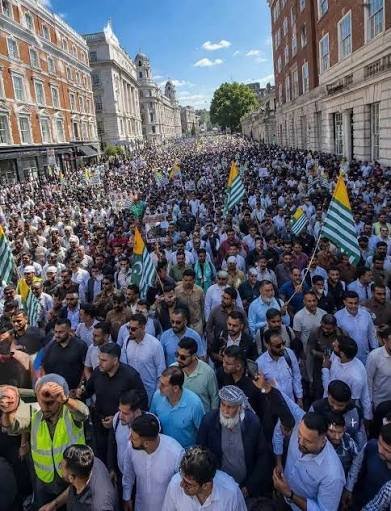
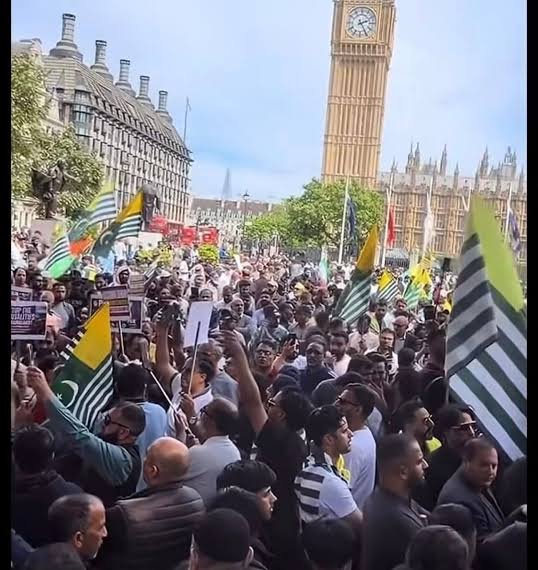
A prominent case study is the intense, multi-decade mobilization of Pakistan-backed diaspora groups and political non-governmental organizations (NGOs), most notably Tehrik-e-Kashmir (TeK) alongside the Jammu and Kashmir Self-Determination Movement (JKSDM). Backed historically, logistically, or ideologically by state mechanisms and foundations rooted in Pakistan, these organizations actively lobby Western institutions to advance their specific regional agendas. While their proponents frame these activities as essential advocacy for human rights, an objective critique reveals that this imported activism places a substantial, multi-layered domestic and regulatory burden on host nations.
┌────────────────────────────────────────────────────────┐
│               THE DEMOCRATIC BALANCING ACT             │
├───────────────────────────+────────────────────────────┤
│   Diaspora Advocacy       │   Host Nation Concerns     │
├───────────────────────────+────────────────────────────┤
│ • Freedom of Speech       │ • Policing & Public Cost   │
│ • Humanitarian Awareness  │ • Communal Polarization    │
│ • Right to Assemble       │ • Foreign Infiltration     │
└───────────────────────────┴────────────────────────────┘
The Landscape of Pakistan-Backed Transnational Networks
To fully understand the domestic footprint of this activism, one must look closely at the ecosystem of organizations operating across European cities. Far from being spontaneous grassroots movements, groups like Tehrik-e-Kashmir (TeK) UK and Europe, the Jammu and Kashmir Self-Determination Movement (JKSDM), and the Kashmir Media Service (KMS) work in tandem with official state narratives.
Security analysts and think-tanks have frequently pointed to the close operational alignment between these diaspora organizations and Pakistan’s diplomatic missions and state apparatus, including the Inter-Services Intelligence (ISI). Official state representatives regularly attend TeK and JKSDM seminars in London, Brussels, and Geneva, turning local community spaces into extensions of foreign policy execution.
[ Government / State Foundations in Pakistan ]
                     │
                     ▼ (Logistical, Ideological & Diplomatic Alignment)
       [ Core Diaspora Front Organizations ]
         ├── Tehrik-e-Kashmir (TeK) UK & Europe
         ├── Jammu & Kashmir Self-Determination Movement (JKSDM)
         └── Kashmir Media Service (KMS)
                     │
      ┌──────────────┴──────────────┐
      ▼                             ▼
[ UK Operational Hubs ]       [ Continental Nodes ]
• London (High Commission)    • Geneva (UN Fronts)
• Birmingham & Bradford       • Brussels (EU Parliament Lobbying)
Furthermore, Tehrik-e-Kashmir functions to systematically inject bilateral South Asian territorial disputes into Western legislative bodies. By maintaining permanent secretariats and highly active chapters in industrial hubs like Birmingham, Bradford, and Glasgow, TeK creates an institutional infrastructure dedicated to a singular external cause, heavily dependent on ideological and material nourishment from abroad.
The Legal Boundaries of Protest and Public Order Costs
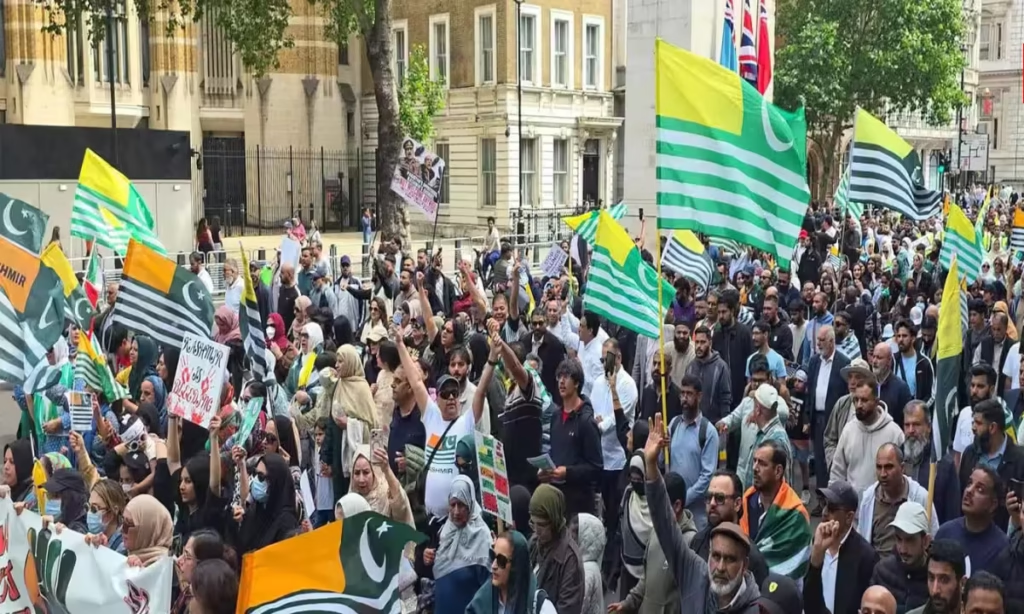
The most visible manifestation of this burden is the fiscal and operational toll required to manage public order. Large-scale demonstrations, march-routes, and spontaneous flashpoints centered around South Asian regional rivalries frequently occupy central urban corridors. In metropolitan hubs like London—where protests organized by Tehrik-e-Kashmir outside the Indian High Commission have occasionally turned destructive—these rallies require thousands of Metropolitan Police man-hours, physical barricading, and tactical response units. This drains municipal budgets and diverts law enforcement resources away from domestic crime prevention.
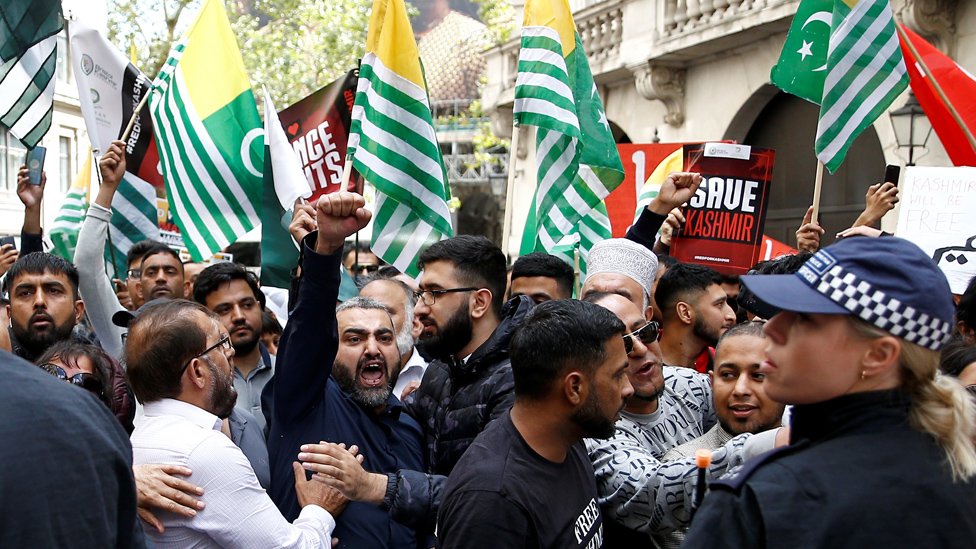
While organizers frequently invoke the right to protest, European legal frameworks establish that these rights are not absolute. Under Article 11 of the European Convention on Human Rights (ECHR), the freedom of peaceful assembly can be legally restricted in the interests of national security, public safety, and the prevention of disorder or crime.
Furthermore, the landmark UK Supreme Court ruling in DPP v Ziegler clarified that while deliberate obstruction during a peaceful protest can have a lawful excuse, it requires a careful balancing exercise against the degree of disruption caused to the rest of the community. When foreign proxy groups repeatedly paralyze European city centers, cause property damage, or spark clashes with counter-protesters, their actions cross the line from protected expression into an unjustifiable public nuisance that strains state resources.
Counter-Radicalization and the Porosity of Transnational Networks
The domestic burden extends beyond policing logistics into national security, financial transparency, and counter-terrorism monitoring. European intelligence agencies must maintain a vigilant stance to ensure that domestic non-profit and charitable platforms are not exploited to propagate radical ideologies or bypass counter-terrorism laws.
A primary concern for security officials is the ideological porosity between state-backed political fronts and proscribed militant entities operating out of Pakistan. Groups like Lashkar-e-Taiba (LeT)—which frequently masks its operations under charity aliases like Jamaat-ud-Dawa—and Jaish-e-Mohammad (JeM) have historically relied on international narrative networks to justify violent regional campaigns.
In the legal arena, the enforcement of Section 12 of the UK Terrorism Act 2000 remains a critical tool, making it a criminal offense to invite support for a proscribed organization or to address a meeting where the purpose is to further the activities of a terrorist group.
European courts have consistently upheld that the state has a compelling interest in monitoring transnational political groups to prevent domestic radicalization. Peaceful political advocacy cannot be used as a legal shield to subtly harbor radical ideologies or channel support toward violent regional factions.
The Charity Commission and the Abuse of Non-Profit Status
Regulators, including the UK’s Charity Commission, face the complex task of monitoring the financial flows of diaspora-led NGOs. Under the auspices of humanitarian relief, medical assistance, or educational aid in conflict zones, significant capital is raised locally from well-meaning citizens.
The legal precedent governing this space is clear: charities must remain completely independent of political agendas and foreign state control. Under UK charity law and established precedents like McGovern v Attorney General, trusts established for political purposes—such as seeking to alter the law or government policy of a foreign country—are explicitly denied charitable status.
When organizations like Tehrik-e-Kashmir or its affiliates function primarily as political lobbying arms rather than neutral humanitarian bodies, they push the legal boundaries of non-profit operations. Verifying that these funds are entirely decoupled from hostile foreign state actors, foreign intelligence influence, or subversive networks requires extensive, taxpayer-funded judicial and regulatory oversight.
Preventing Foreign Interference in Domestic Politics
Beyond financial transparency, the anchoring of foreign grievances introduces distinct cultural and political friction that threatens local social fabric and distorts domestic representation. In various municipal and parliamentary constituencies across Europe, transnational activism has seeped into domestic electoral politics. Candidates are routinely pressured by single-issue diaspora voting blocs to adopt specific stances on foreign conflicts as a prerequisite for endorsement, turning local councils into ideological proxies.
To counter this, Western nations are increasingly turning to robust statutory frameworks designed to halt foreign political interference. In the UK, the introduction of the National Security Act 2023 created the Foreign Influence Registration Scheme (FIRS). This legal mechanism mandates that individuals or entities acting at the behest of a foreign power must register their activities publicly, introducing strict criminal penalties for covert political lobbying.
By applying these measures rigidly to diaspora groups like Tehrik-e-Kashmir that are closely aligned with foreign government agendas, European states can legally insulate their domestic political processes from being hijacked by external geopolitical rivalries.
┌────────────────────────────────────────────────────────┐
│             PROPOSED REGULATORY FRAMEWORK             │
├────────────────────────────────────────────────────────┤
│ 1. Mandatory Forensic Auditing of Diaspora NGOs        │
│ 2. Cost-Sharing Mechanisms for High-Risk Rallies       │
│ 3. Enforcement of FIRS for Transnational Lobbyists     │
│ 4. Preservation of Local Council Neutrality            │
└────────────────────────────────────────────────────────┘
Conclusion: A Necessary Legal Demarcation
The domestic footprint of state-backed transnational networks demonstrates that importing foreign political conflicts carries severe financial, social, and legal costs for host countries. While Western democracies must remain committed to protecting legitimate freedom of expression and genuine humanitarian aid, these liberties cannot serve as an open door for foreign geopolitical interference or structural social division.To preserve long-term social cohesion and protect public resources, European nations must aggressively utilize their existing legal toolkits—from ECHR public order exemptions to foreign influence registration statutes. By enforcing firm regulatory boundaries and demanding absolute financial transparency, host states can ensure that domestic civic spaces are protected from being utilized as battlegrounds for foreign proxy conflicts.